|
Biomolecules Folding and Disease |

|
|
|
The BioFolD group focuses on bridging computational biology, machine learning, and clinical genomics to understand the relationship between genetic variation and human disease. Our mission is to develop accessible, cutting-edge tools and infrastructures that translate complex genomic data into actionable clinical insights, with a strong emphasis on rare diseases, precision medicine, and responsible, FAIR data sharing.
Genomic Variations and Disease
|
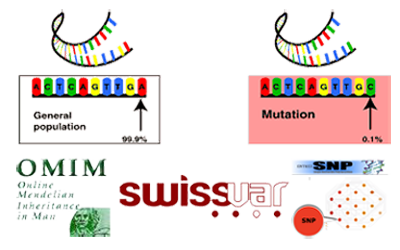
We develop machine learning algorithms to distinguish disease-related mutations from neutral polymorphisms. Our foundational tools such as PhD-SNP and WS-SNPs&GO integrate sequence, evolutionary, and functional annotations (Gene Ontology) to predict variant pathogenicity. We recently updated our flagship lightweight tool, PhD-SNPg, to handle both coding and non-coding nucleotide variants using gradient boosting. Supported by: Italian Ministry of Health (PNRR-MR1-2022-12376067), ELIXIR Europe (ENIGMA & BioChef), Italian MIUR (PRIN-201744NR8S), NIH USA (1R21AI117703-01A1, 1R21AI134027-01A1), Spanish Ministry of Science (DPI2015-67082-P), and EU Marie Curie (PIOF-GA-2009-237225).
|
Protein Folding Stability and Kinetics
|
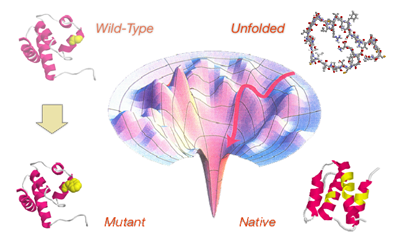
We pioneer methods to predict the thermodynamic and kinetic effects of mutations. Our foundational I-Mutant2.0 and K-Fold tools paved the way for predicting protein stability and folding rates from sequence and structure. Supported by: Italian MIUR (PRIN-201744NR8S), EU Marie Curie (PIOF-GA-2009-237225), and NIH USA (1R21AI117703-01A1).
|
RNA and Protein Structure Comparison and Prediction
|
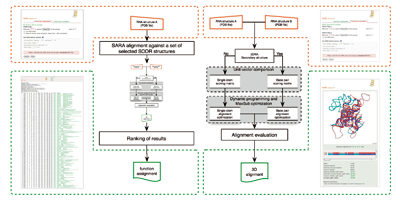
Understanding the relationship between structure and function is fundamental to molecular biology. Our group develops algorithms and statistical potentials for the structural alignment and assessment of RNA and proteins. In the field of RNA bioinformatics, we focus on the challenge of aligning highly flexible 3D structures to infer functional conservation. Our SARA tool implements a unit-vector approach to perform fast and accurate pairwise structural alignments of ribonucleic acids. Supported by: EU Marie Curie Reintegration Grant (IRG39722), the Valencian Government.
|
Federated Health Data & Global Cooperation
|
As a WP Co-Leader in the ELIXIR Human Data and Translational Research (HDTR) project, BioFolD is actively building the next generation of federated data infrastructures across Europe. By developing privacy-preserving, containerized workflows for the ENIGMA (genomics-imaging) and BioChef (hybrid workflow) platforms, we are enabling researchers to securely analyze sensitive health data across multiple countries without moving the data itself. Supported by: ELIXIR Europe (HDTR: ENIGMA & BioChef, EGA Commissioned Service), University of Bologna (Global South Cooperation - RaDAr-IT, UNIBO-UCSD Cooperation Grant).
|
Open and Sustainable AI (OSAI) Contributions
|
We contributed to the community-driven DOME Recommendations for supervised machine learning validation in biology (Walsh et al., Nature Methods, 2021), which established reporting guidelines to improve reproducibility and assessment in biological ML studies. More recently, we co-authored the Open and Sustainable AI (OSAI) Perspective in Nature Methods (Farrell et al., 2026), providing actionable recommendations to address the reusability, reproducibility, and environmental sustainability of AI models in the life sciences. We aim to apply these best practices across our own tools and federated infrastructures, ensuring that the computational resources we develop remain open, FAIR, and environmentally sustainable. Supported by: ELIXIR Europe and Italian Ministry of Health (PNRR-MR1-2022-12376067).
|